
RPI Setup
This will guide you through the setup process of the Minodu LCN on the Raspberry Pi.
Requirements
- A Raspberry pi 4 or 5, preferebly with 8GB of ram.
- An ethernet adapter and a cable
- An SD card reader and an sd card with a minimum size if 64GB.
- Python has to be installed on your computer
Setup Raspberry Pi Image
Create Base Image
- Install Raspberry Pi OS Lite (64 bit) on Raspberry Pi. (Tested with this version.) You can use Raspberry PI Imager to create the Image
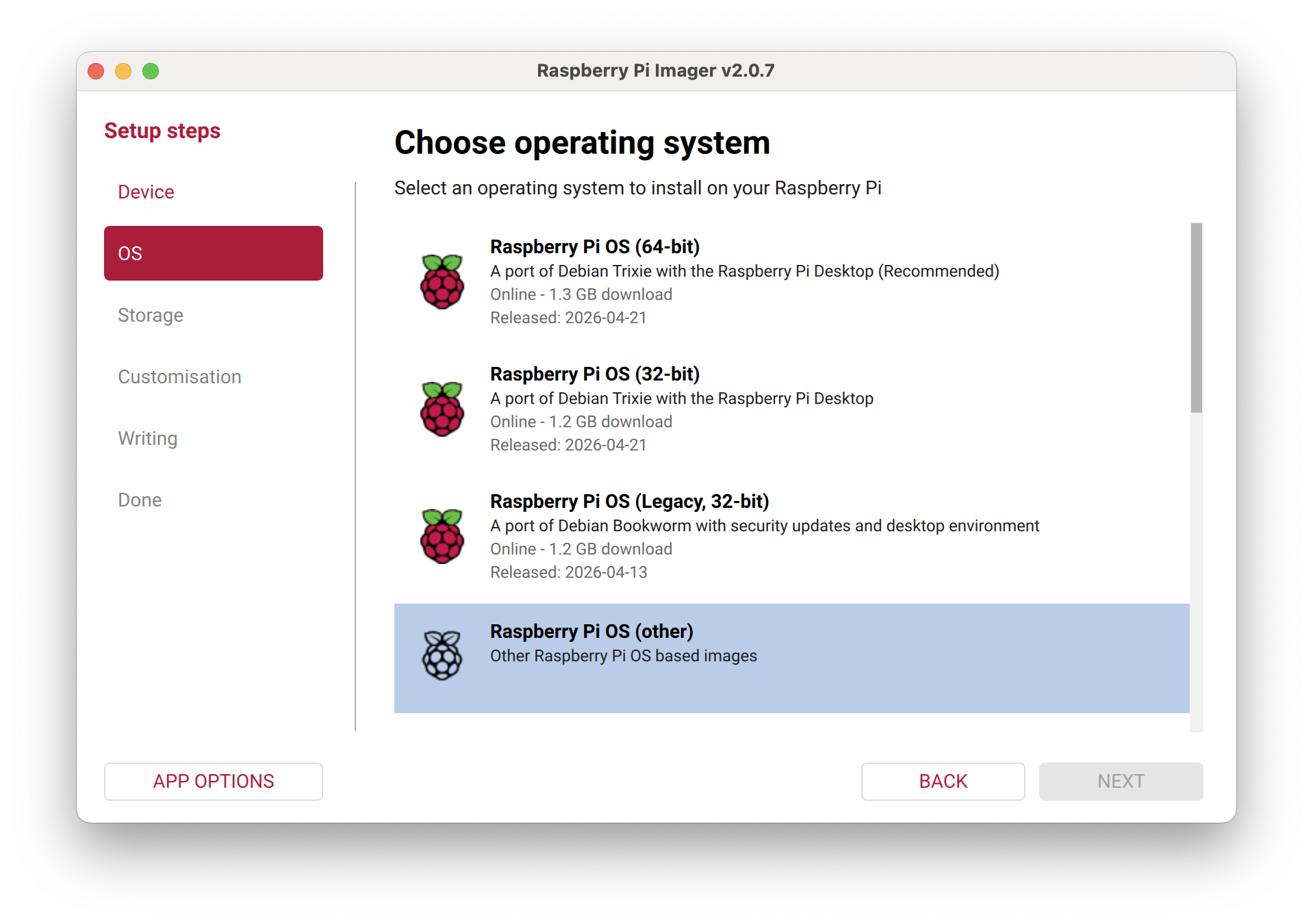
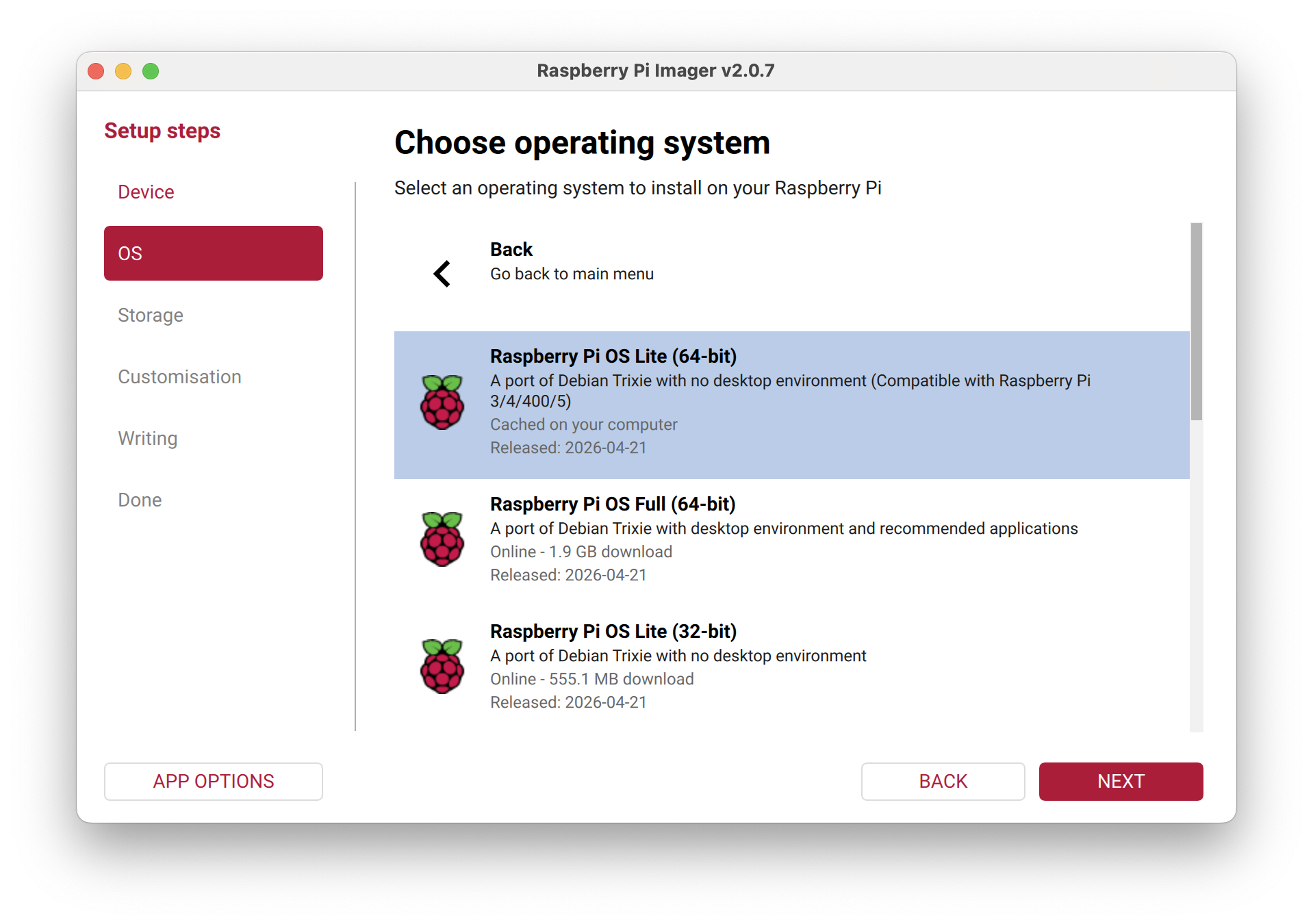
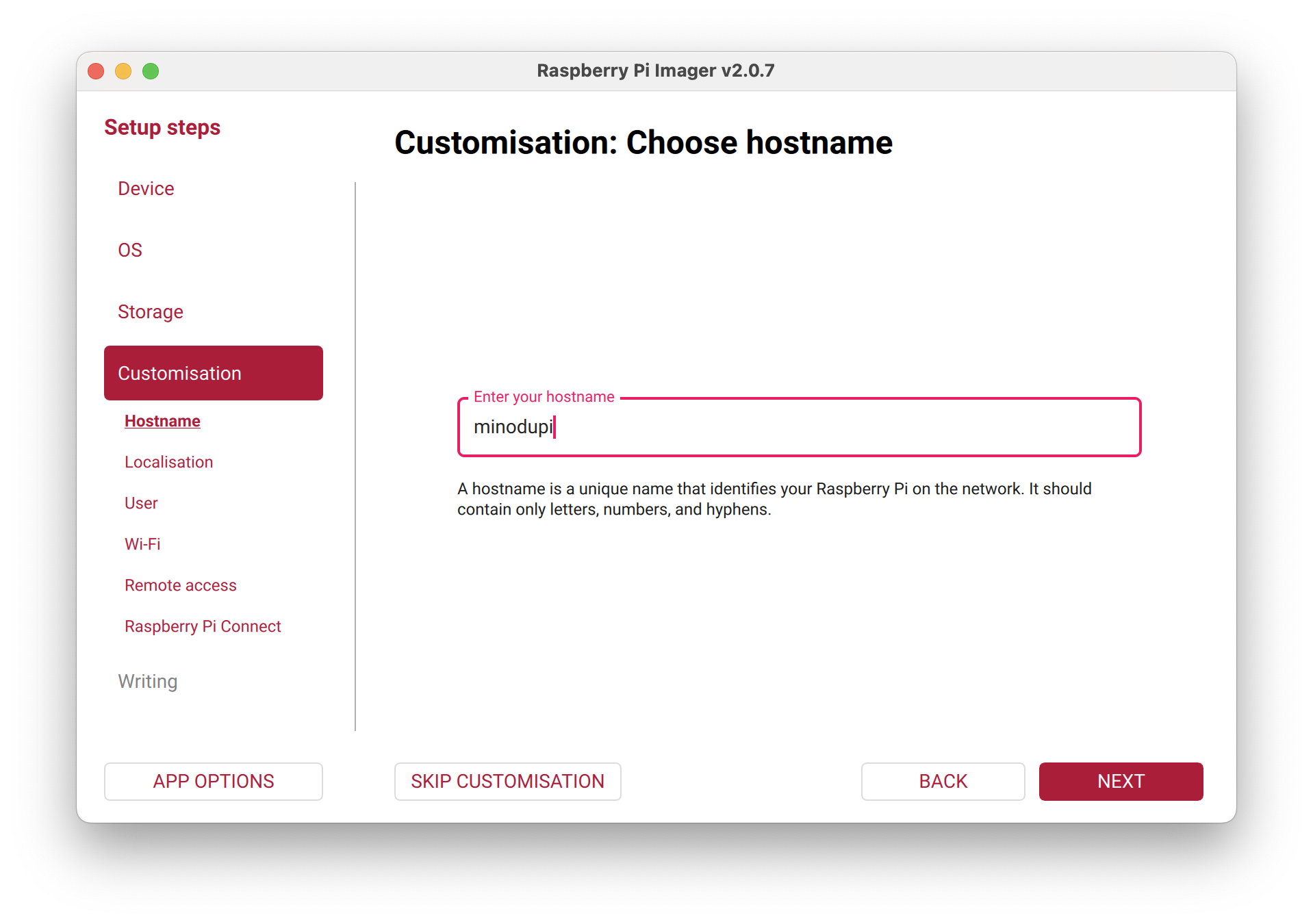
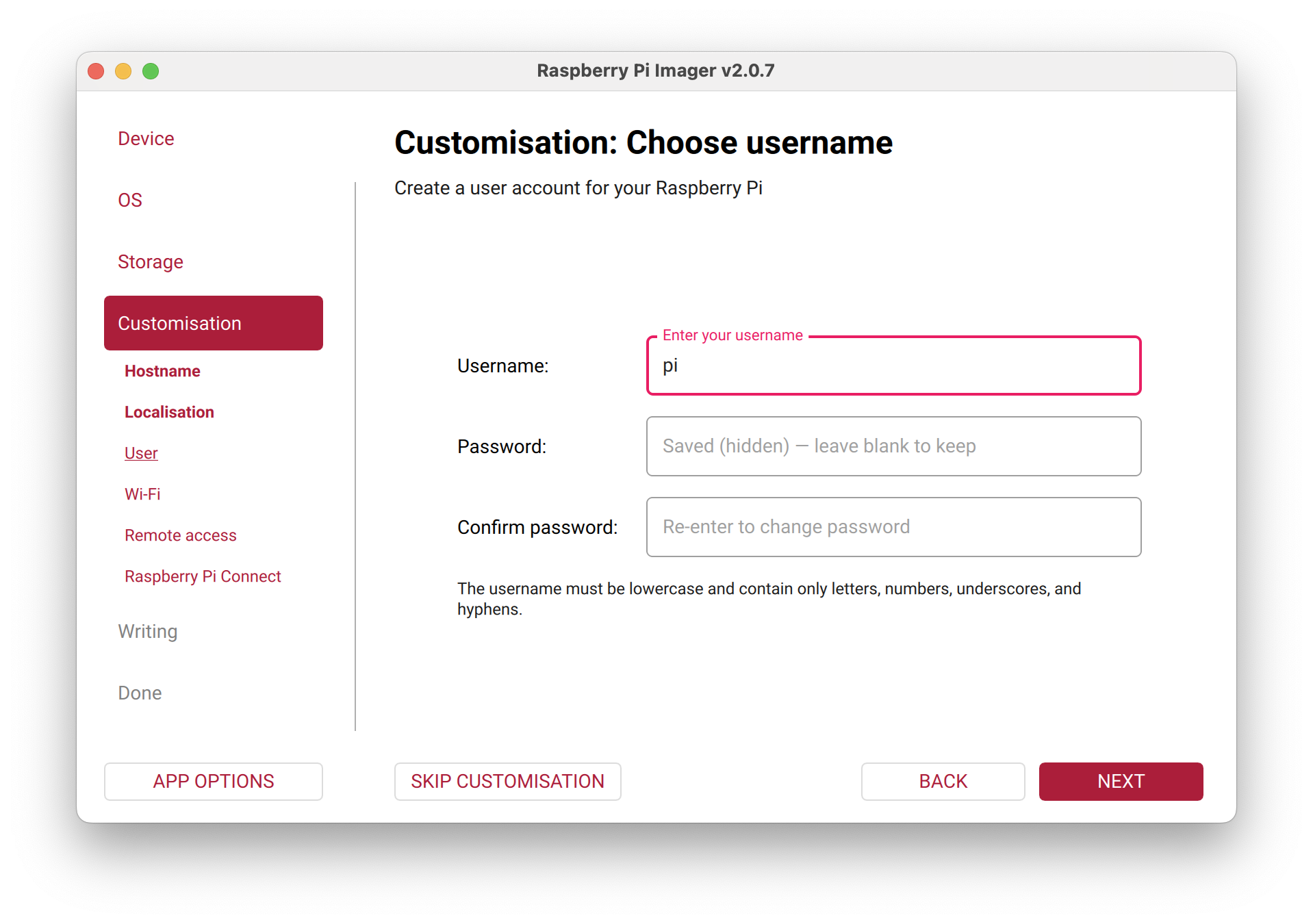
- Set the hostname to minodupi.local, the username to pi and enable ssh in the custom settings of the image. remember the password you choose and write it down.
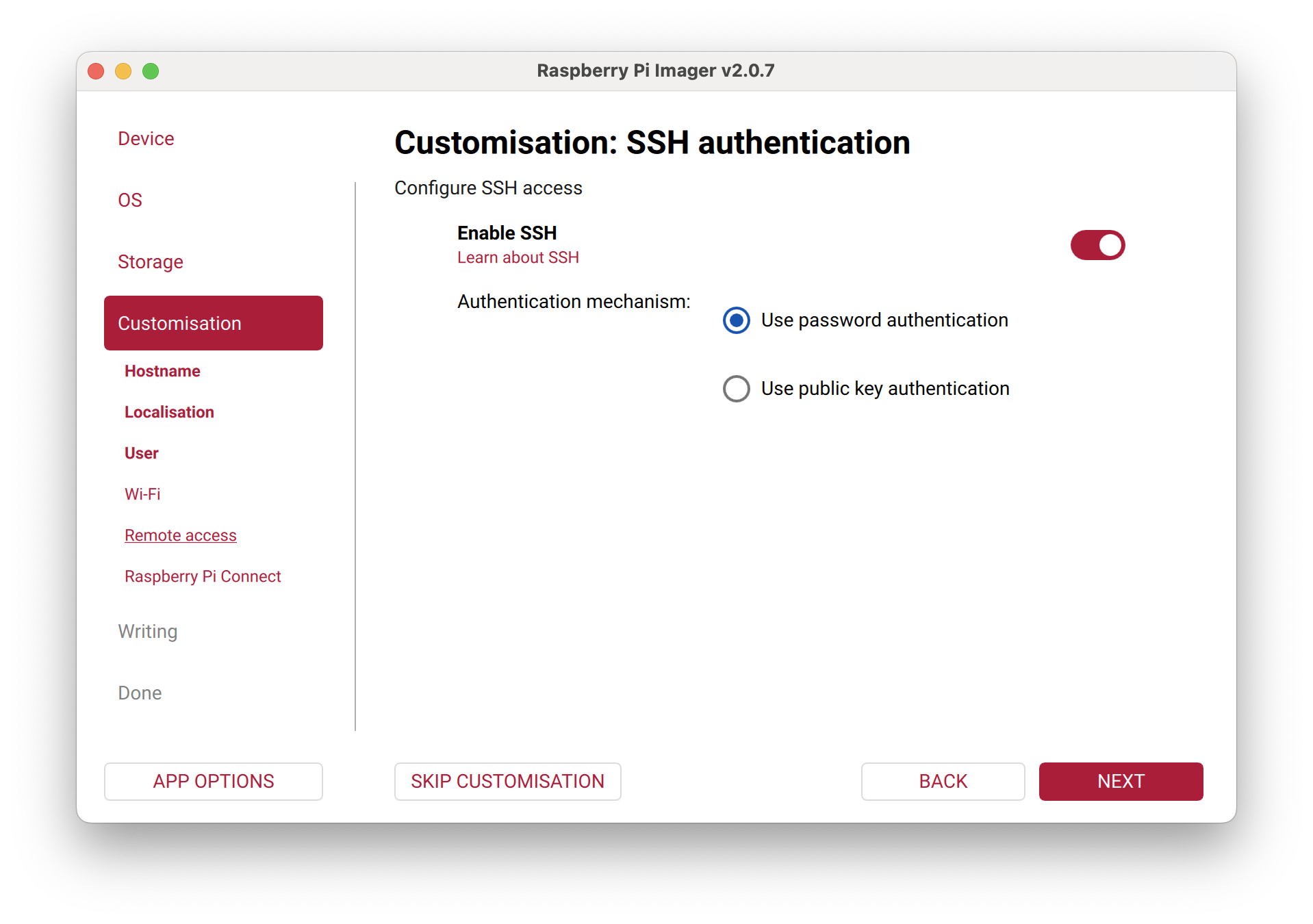
- Once the image is written, insert the sd card into the pi
Connect to RPI
- Connect via ethernet cable to raspberry pi and enable internet Sharing on mac, alternativly, you can plug the raspberry pi into your dhcp router via ethernet
- Make sure
ping minodupi.localreturns an answer, meaning your machine can discover the raspberry pi in the network - Alternative: Connect Monitor do RPI and type in
ifconfigto find out the RPIs ip address and use that one instead of minodupi.local
Install MinoduLCN
- Run all of these commands on your host machine. Don’t run these scripts on the raspberry pi itself.
- Download and unzip the minodu installer from https://github.com/MinoduLCN/minodu-installer/archive/refs/heads/main.zip or download it with
curl -L https://github.com/MinoduLCN/minodu-installer/archive/refs/heads/main.zip -o repo.zip && unzip repo.zip - Open a terminal and run:
cd minodu-installer-main pip install pyinfra # run full install script pyinfra @ssh/minodupi.local deploy.py -v --ssh-user="pi" --ssh-password="<pi-user-password>" # or using an ip address pyinfra @ssh/<ip-address> deploy.py -v --ssh-user="pi" --ssh-password="<pi-user-password>" # or run a single step pyinfra @ssh/minodupi.local 01_system_packages.py -v --ssh-user="pi" --ssh-password="<pi-user-password>" # alternativly you can run the install script on the raspberry pi itself by logging in via ssh and running: pyinfra @local deploy.py - It will ask you the following options. In [brackets] is the default value if you leave it empty. Installing the llm is only recommended on a raspberry pi 5 with at least 8gb of ram and a good cooling fan.
WiFi SSID [Minodu]: WLAN country code [DE]: RaspAP admin password [secret]: Install Minodu LLM for Chatbot (y/n) [n]: Admin phone number [90000000]: Admin password [secret]: - Follow the instructions and wait until the installer is done, if you select to install the llm the install procedure will take much longer, since it needs to build the vector database on the raspberry pi.
- The installer might drop the ssh connection after installing the wlan driver and throws an error. If that happens, just wait until it is rebooted and start the script again. It will skip the completed steps
Manual installation
If the installation script fails, you can check this repo to guide you through the manual installation process: https://github.com/MinoduLCN/minodu-installer.
Troubleshooting
- Make sure raspberrpi is reachable with
ping minodupi.local. If not. reinstall image and make sure to set the hostname to minodupi.local - make sure there is a user on the raspberry pi with the name pi (standard username).
- Make sure ssh is enabled, test with
ssh pi@minodupi.local. Default password is raspberry. If it is not working reinstall image and enable ssh access. - Make sure your computer is connected to the internet during the install procedure.