
About the project
Minodu explores how decentralised, locally maintained digital infrastructures can support climate resilience in low-resource settings. Its aim is to bridge local knowledge with scientific knowledge to better address the effects of climate change. The project follows a co-design approach: we design, test, and build together. At the core of Minodu is the Local Community Network (LCN), a decentralised, offline-first system based on low-cost hardware and software. It combines environmental sensing, local data access, and community exchange. The system enables access to environmental data, agricultural advice, and community knowledge through local networks that operate without continuous Internet connectivity.
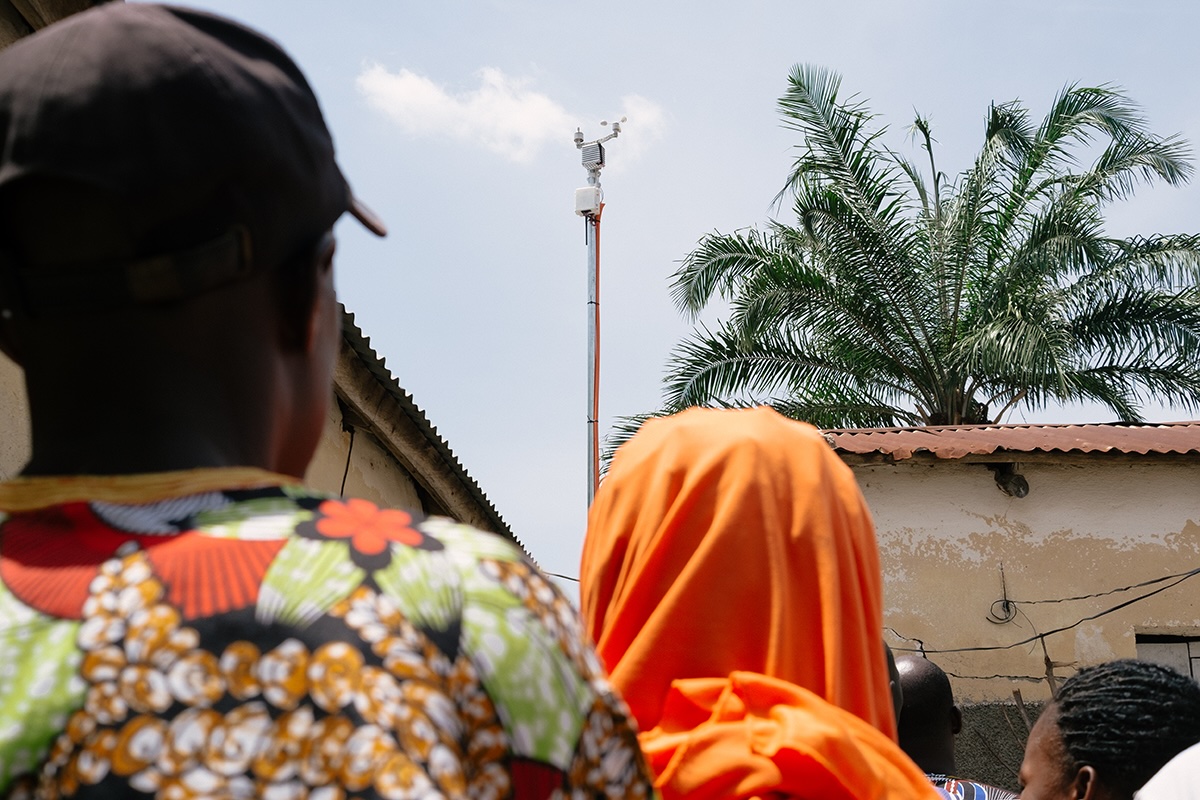 Local Community Network in Tchitchao.
Objectives
Launched in 2023 in the Kara region of northern Togo, Minodu aims to:
-
facilitate access to useful knowledge without depending on continuous Internet access;
-
value local knowledge and field-based experience, particularly from the communities of Tchitchao, Lama-Saoudé, and Soumdina-Haut;
-
co-create practical solutions with communities, based on locally identified needs;
-
strengthen self-reliance, local maintenance capacities, and mutual aid between villages.
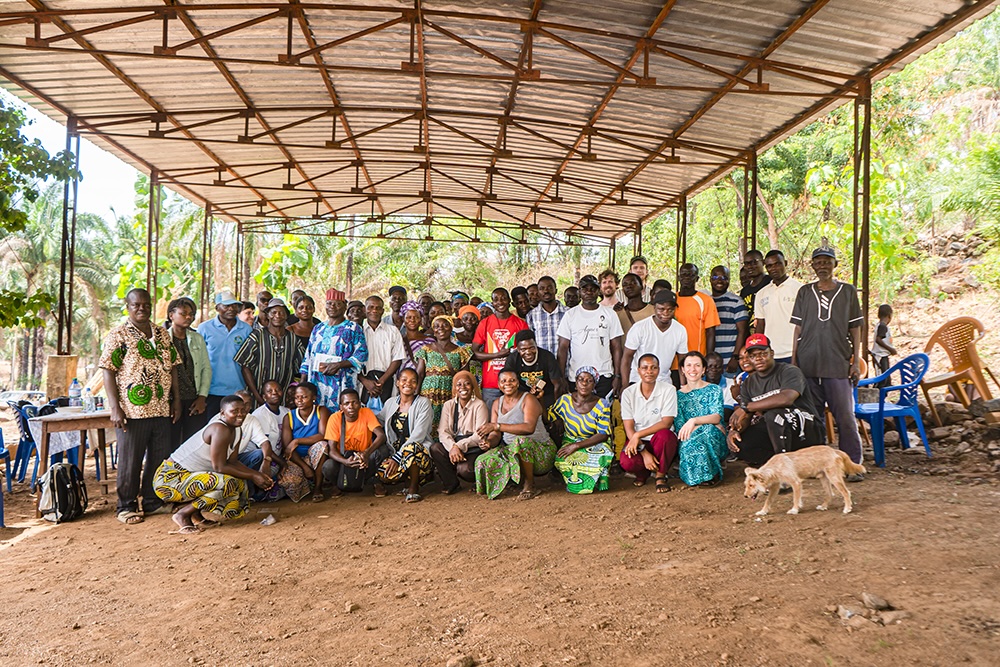
Students from the Kara University worked with the communities to co-design simple, practical and context-based solutions.
What does DIY mean?
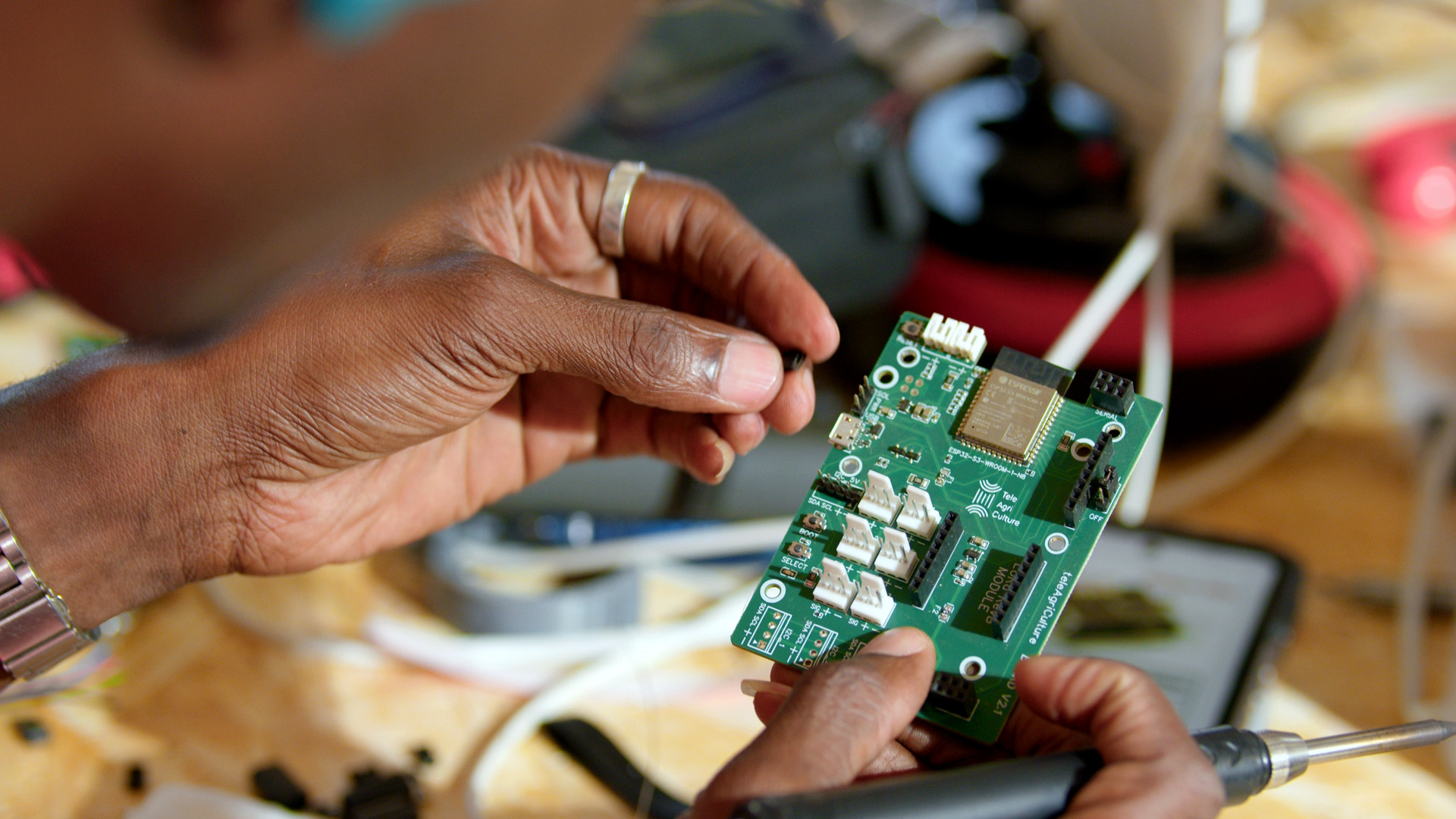
DIY stands for «Do It Yourself». It means building, repairing, or adapting things with simple and accessible materials, without relying on expensive external experts.
In Minodu, the DIY approach helps create a robust local community network that is affordable, locally understandable, and easier to maintain over time.
Partners
This project is the result of a collaboration between the following parties:
- Local communities: Tchitchao, Lama-Saoudé, Soumdina-Haut
- Kara University: Magnim Essolakina BOKOBANA, Damghane OUDANOU, Mikémina PILO
- DFKI (German Center for Artificial Intelligence): Friederike Fröbel, Philipp Gschwendtner, Antonia Katthaen, Carina Lange, Jannes Ulbrich
- Further Contributers: Séti AFANOU, Nihade ASSOUMANOU, Abiré BÉRÉ, Ousia FOLI-BEBE, Lutz Reiter, Eric Tiedt, Victoire TSAMEDI
Funding
This project is funded by the German Federal Ministry of Research, Technology and Space (BMFTR) as part of the Minodu project (FKZ 01LL2202A), within the funding line “Sustainable land management in sub-Saharan Africa: improving livelihoods through local research”.
Contributing
Contributions are welcome! Minodu is an open and evolving project. We welcome contributions from students, developers, researchers, makers, community members, and partner organisations who want to help improve the Local Community Network and adapt it to real needs on the ground.
You can contribute in different ways, for example by:
- reporting problems or bugs you encounter while using the system;
- suggesting new features, content, or interface improvements;
- improving the documentation, setup guide, or user manual;
- translating or adapting content into local languages;
- sharing ideas for using the LCN in schools, villages, farms, associations, or training contexts;
- contributing code, hardware improvements, or maintenance solutions.
If you would like to contribute directly to the code or documentation, you can:
- Fork the repository on GitHub.
- Create a feature branch:
git checkout -b feature/my-feature - Commit your changes:
git commit -m "Add my feature" - Open a Pull Request with a brief description of what you changed and why.
Support
Are you having problems with your Local Community Network (LCN)? Or do you have ideas you’d like to implement or share with others? If you are not familiar with GitHub, you can still contribute. Please send us your feedback, questions, ideas, or post them in the Discussion Baord. Minodu is built through shared testing, local experience, and practical improvements over time.
License
Minodu source code is released under the GNU License.
Tech-Team
| Name | GitHub |
|---|---|
| Victoire TSAMEDI | abayi6 |
| Friederike Fröbel | frfr01 |
| Jannes Ulbrich | jannesulbrich |
| Lutz Reiter | lutzer |
| Ousia A. FOLI-BEBE | ousiafb |
| Séti AFANOU | setico |